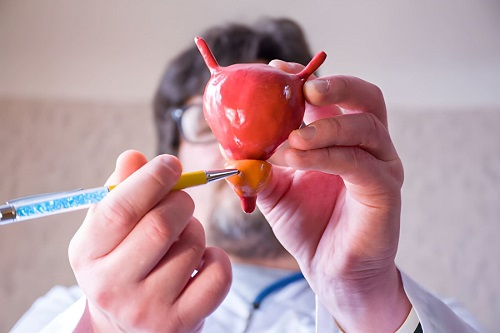
Best Prostate Artery Embolisation Doctor in Vile Parle, Mumbai
Benign Prostatic Hyperplasia (BPH) which is also called an enlarged prostate, is pretty common in men as they get older. Best Prostate Artery Embolisation Doctor in Vile Parle, Mumbai. In BPH the larger gland begins pressing on the urethra, so you might notice urinary problems like having to run to the bathroom a lot, trouble getting started, or difficulty getting urine through, a slimmer stream , sudden urgency, a stream that keeps getting broken up, and having to get up again and again during the night. Altogether, these things can really mess with everyday routines and your overall quality of life , sometimes in a pretty major way.
If you’re searching for the Best Prostate Artery Embolisation Doctor in Vile Parle, Mumbai, Dr. Ganesh Deogaonkar offers advanced Prostate Artery Embolisation (PAE). It’s a minimally invasive, image-guided procedure, which aims to shrink the prostate size without doing open surgery. This newer approach usually means quicker recovery, less discomfort, and it may help maintain sexual function for the right patients, because selection matters and not everyone is the same. Read More-
Dr. Ganesh Deogaonkar is an Endovascular Specialist with over 18 years of experience in minimally invasive, image-guided vascular care. He holds DNB, PDCC, FRCR (London), EBIR (Vienna), and FVIR (GSTT, London) qualifications. He completed advanced fellowship training at Guy's and St Thomas' NHS Foundation Trust, London, where he also served as a Consultant before returning to India.
He is currently the Associate Director – Vascular & Interventional Radiology at Nanavati Max Super Speciality Hospital, Vile Parle West, Mumbai. He specializes in the minimally invasive treatment of varicose veins, diabetic foot, peripheral arterial disease, deep vein thrombosis (DVT), blocked leg arteries, aortic disorders, and other complex vascular conditions using advanced image-guided endovascular techniques.
Prostate Artery Embolisation, also called PAE, is a newer minimally invasive procedure done by an Interventional Radiologist, and it’s used for Benign Prostatic Hyperplasia or BPH, meaning an enlarged prostate. During the procedure, a very small catheter gets placed through a tiny puncture in the wrist or groin then it’s steered toward the arteries that supply the prostate gland, all while they use real time imaging to guide things. After that, tiny embolic particles are introduced to cut down the blood flow going to the overgrown tissue.
As that blood supply drops, the prostate tends to shrink bit by bit over the next weeks and months, and the urinary symptoms usually ease up, without having to surgically remove the gland.It also helps preserve the prostate gland while improving urinary symptoms.
- Frequent urination
- Urgency to urinate
- Weak urine stream
- Difficulty starting urination
- Interrupted urine flow
- Dribbling after urination
- Feeling of incomplete bladder emptying
- Waking up several times at night to urinate
- Sudden urge to pass urine
- Chronic urinary retention
- Age-related prostate enlargement
- Hormonal changes
- Family history
- Obesity
- Genetic factors
- Diabetes
- Lack of physical activity
- Metabolic syndrome
- Increasing age
- Lifestyle factors
- Men above 50 years
- Family history of BPH
- Obesity
- Diabetes
- High blood pressure
- Sedentary lifestyle
- Smoking
- Heart disease
- No major surgery
- No surgical cuts or stitches
- Local anaesthesia
- Day-care procedure
- Faster recovery
- Minimal pain and discomfort
- Preserves sexual function in suitable patients
- Reduced risk of complications
- Quick return to daily activities
- Effective long-term relief from urinary symptoms
- Men with enlarged prostate (BPH)
- Frequent urination
- Difficulty passing urine
- Poor urine flow
- Patients not responding to medications
- Men wishing to avoid prostate surgery
- Patients unsuitable for surgery
- Patients concerned about preserving sexual function
Why choose Prostate Artery Embolisation (PAE)? Unlike conventional prostate surgery, Prostate Artery Embolisation is a minimally invasive, image-guided procedure that offers effective relief from enlarged prostate symptoms without major surgery. It is performed through a tiny catheter, allowing most patients to return home the same day with a quicker recovery and minimal discomfort. In suitable patients, PAE also helps preserve sexual function while significantly improving urinary symptoms and overall quality of life.
- No major surgery
- No surgical cuts or stitches
- Day-care procedure
- Faster recovery
- Minimal discomfort
- Preserves sexual function in suitable patients
This procedure is carried out inside a specialised angiography suite ,usually with local anaesthesia. A very small catheter gets inserted via a tiny puncture in the wrist or groin and then it is guided, step by step, toward the arteries that supply the prostate gland. This is done with advanced X ray imaging ,so the team can see everything in real time.
After that, tiny embolic particles are pushed into those arteries, to cut down blood flow to the enlarged prostate. Once the circulation starts to drop, the prostate slowly shrinks, which tends to ease the pressure on the urethra, and in turn improves the urinary symptoms. In most cases, the procedure lasts around 60 to 90 minutes, and most people go home the same day, or at most within 24 hours .
After Prostate Artery Embolisation, recovery is usually pretty swift, like you can feel things easing up, fairly quickly. You may notice some mild pelvic discomfort, and maybe a sort of uptick in urinary frequency, for a few days, and it generally calms down with the right medication, no big drama.
For most people, getting back to normal everyday life happens somewhere around 2 to 5 days. In the meantime, that bigger wave of relief from urinary symptoms often comes later, over the following 2 to 12 weeks, because the prostate keeps gradually shrinking over time, bit by bit.
Q.1. What is Prostate Artery Embolisation (PAE)?
Ans - PAE is a minimally invasive procedure that reduces blood supply to the enlarged prostate, allowing it to shrink naturally and improve urinary symptoms.
Q.2. Is PAE a surgery?
Ans - No. It is a minimally invasive image-guided procedure performed through a tiny catheter without major surgery.
Q.3. Is hospital admission required?
Ans - Most patients are discharged on the same day or within 24 hours.
Q.4. How long does the procedure take?
Ans - The procedure generally takes between 60 and 90 minutes.
Q.5. Is PAE painful?
Ans - It is usually performed under local anaesthesia, and patients experience minimal discomfort.
Q.6. When can I return to work?
Ans - Most patients return to routine activities within 2–5 days.
Q.7. Does PAE preserve sexual function?
Ans - In suitable patients, PAE has a low risk of affecting sexual function and is often chosen for this reason.
Q.8. How long does it take to see improvement?
Ans - Most patients notice gradual improvement within a few weeks, with continued benefits over the next 2–3 months.
Nanavati Max Hospital | Vile Parle West | LIC Colony | Suresh Colony | Andheri | Mumbai