Best Doctor for Gangrene in Vile Parle, Mumbai
Gangrene is a serious medical condition that occurs when body tissue is damaged due to reduced blood supply, infection, or both. It usually shows up in the toes, feet, fingers, and legs, but it can also happen in other zones of the body. Best Doctor for Gangrene in Vile Parle, Mumbai Getting an early diagnosis , and starting the right treatment on time, matters a lot so the condition can be managed better and the chance of complications goes down.
Now, if you are searching for the Best Doctor for Gangrene in Vile Parle, Mumbai, Dr. Ganesh Deogaonkar offers a complete checkup approach along with minimally invasive vascular treatment for people dealing with gangrene and circulation related issues. His main focus is figuring out what is actually driving it in the first place, improving blood flow when it is possible, and then shaping a customized treatment roadmap that fits the patient, not just some general plan. Read More-
Dr. Ganesh Deogaonkar is an Endovascular Specialist with over 18 years of experience in minimally invasive, image-guided vascular care. He holds DNB, PDCC, FRCR (London), EBIR (Vienna), and FVIR (GSTT, London) qualifications. He completed advanced fellowship training at Guy's and St Thomas' NHS Foundation Trust, London, where he also served as a Consultant before returning to India.
He is currently the Associate Director – Vascular & Interventional Radiology at Nanavati Max Super Speciality Hospital, Vile Parle West, Mumbai. He specializes in the minimally invasive treatment of varicose veins, diabetic foot, peripheral arterial disease, deep vein thrombosis (DVT), blocked leg arteries, aortic disorders, and other complex vascular conditions using advanced image-guided endovascular techniques.
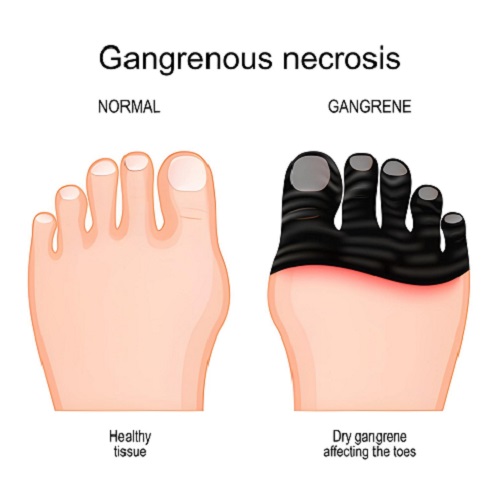
Gangrene shows up when the body’s tissue does not get enough blood flow, or when it becomes severely infected, and then the tissues start to break down. It most often ends up in the feet and toes, particularly in people who have diabetes , or peripheral arterial disease. It really matters to get prompt medical evaluation, so clinicians can figure out what is causing it and choose the right course of action for treatment.
- Dry Gangrene - Dry gangrene happens when the blood flow to a body part is badly reduced ,so the tissue basically doesn’t get the usual nourishment. Over time the affected area dries out, turns different colors, and then gets damaged . In most cases, this form is not connected with a live infection ,it usually goes more “quiet” than the other types.
- Wet Gangrene - Wet gangrene shows up when damaged tissue gets infected, kind of like it starts to go bad from the inside. It can speed along faster than dry gangrene, and it really needs prompt medical care,like today not later.
- Gas Gangrene - Gas gangrene is a pretty rare yet serious bacterial infection, it actually makes gas build up inside the affected tissues. because of that, it needs an urgent medical evaluation, and treatment, as soon as possible.
- Persistent pain in the affected limb
- Skin discoloration (red, purple, blue, brown, or black)
- Coldness or numbness in the affected area
- Swelling of the foot or leg
- Non-healing wounds or ulcers
- Foul-smelling wound discharge
- Blisters or skin breakdown
- Fever associated with an infected wound
- Difficulty walking due to foot pain
- Changes in skin texture or sensation
- Peripheral Arterial Disease (PAD)
- Diabetes
- Severe infection
- Injury or trauma
- Poor blood circulation
- Blood vessel blockage
- Smoking
- High cholesterol
- High blood pressure
- Chronic kidney disease
- Medical history and physical examination
- Doppler Ultrasound
- CT Angiography
- MR Angiography
- Blood tests
- Wound or tissue culture, when indicated
- X-ray or other imaging studies, depending on the condition
- Medication
- Wound care
- Infection management
- Endovascular procedures to improve blood flow
- Treatment of blocked leg arteries
- Diabetic foot care
- Surgical treatment, when clinically necessary
- Aortic interventions, when appropriate
- Hyperbaric oxygen therapy in selected cases, where appropriate
- Ongoing follow-up and vascular monitoring
If you are trying to find the Best Doctor for Gangrene in Vile Parle, Mumbai, Dr. Ganesh Deogaonkar provides comprehensive evaluation and individualized treatment with a comprehensive evaluation and an individualized approach for gangrene plus circulation related issues. He is Associate Director – Vascular & Interventional Radiology at Nanavati Max Super Speciality Hospital, Vile Parle West, Mumbai, so you get evidence based vascular care adjusted to the each person needs, not just a standard plan. For an appointment and to talk about your case, call +91 90047 42438, then contact the clinic directly to lock in a suitable consultation time.
Q.1. What is gangrene?
Ans - Gangrene is a condition in which body tissue becomes damaged due to reduced blood supply, infection, or both. Early medical evaluation is important to determine the underlying cause and appropriate treatment.
Q.2. What are the early signs of gangrene?
Ans - Early signs may include persistent pain, skin discoloration, numbness, swelling, non-healing wounds, or changes in skin temperature. Symptoms vary depending on the type and severity of the condition.
Q.3. Who is at higher risk of developing gangrene?
Ans - People with diabetes, peripheral arterial disease, poor circulation, severe infections, smoking history, or significant injuries may have a higher risk of developing gangrene.
Q.4. How is gangrene diagnosed?
Ans - Diagnosis may involve a physical examination, Doppler ultrasound, CT angiography, MR angiography, blood tests, and imaging studies. Additional tests may be recommended based on the patient's condition.
Q.5. Can gangrene be treated without major surgery?
Ans - Treatment depends on the cause and severity of the condition. Some patients may benefit from medication, wound care, or minimally invasive endovascular procedures to improve blood flow, while others may require surgical management.
Q.6. When should I consult a doctor for gangrene?
Ans - You should seek prompt medical evaluation if you notice a non-healing wound, changes in skin colour, increasing pain, swelling, numbness, or signs of infection in the foot or leg.
Nanavati Max Hospital | Vile Parle West | LIC Colony | Suresh Colony | Andheri | Mumbai