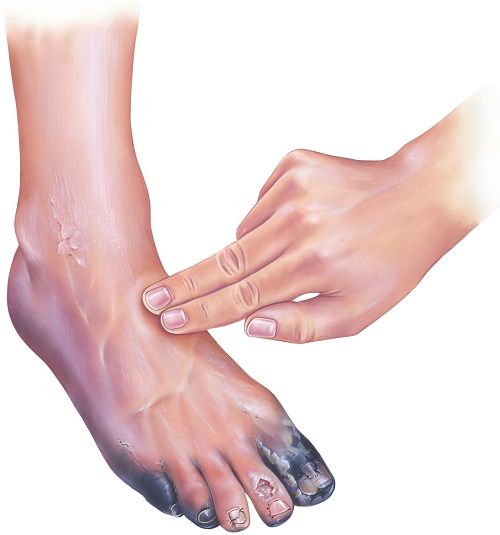
Best Doctor for Gangrene in Andheri, Mumbai
Gangrene is a really serious health issue where body tissue starts to die because the blood flow is not enough, or because of a harsh infection, sometimes it’s both. Best Doctor for Gangrene in Andheri, Mumbai. It usually shows up in the feet, toes, legs, fingers, and hands, but it can also appear in internal organs, not just outside. If it is not treated, gangrene can move along quite fast, causing dangerous infections and in severe situations, even limb amputation.
If you are trying to find the Best Doctor for Gangrene in Andheri, Mumbai, Dr. Ganesh Deogaonkar provides advanced checking and minimally invasive vascular treatment for patients who have gangrene linked to poor circulation. Getting assessed early and starting timely care may help to restart the blood flow, bring the infection under control, save the affected limb, and support a better day to day life overall. Read More-
Dr. Ganesh Deogaonkar is an Endovascular Specialist with over 18 years of experience in minimally invasive, image-guided vascular care. He holds DNB, PDCC, FRCR (London), EBIR (Vienna), and FVIR (GSTT, London) qualifications. He completed advanced fellowship training at Guy's and St Thomas' NHS Foundation Trust, London, where he also served as a Consultant before returning to India.
He is currently the Associate Director – Vascular & Interventional Radiology at Nanavati Max Super Speciality Hospital, Vile Parle West, Mumbai. He specializes in the minimally invasive treatment of varicose veins, diabetic foot, peripheral arterial disease, deep vein thrombosis (DVT), blocked leg arteries, aortic disorders, and other complex vascular conditions using advanced image-guided endovascular techniques.
Gangrene is sort of the death of body tissue, because the blood supply drops, from reduced blood flow, a significant bacterial infection, or both happening at once. When tissue isn’t getting enough oxygen-rich blood it starts to slowly weaken and then die. If it isn’t handled quickly, the infection can creep into the nearby healthy tissue, and then it becomes an actual medical emergency , not something to wait on.
You often see gangrene in people with diabetes, peripheral artery disease , smoking related vascular problems, traumatic injuries, or big severe infections. A quick diagnosis really helps because it improves the chances of saving the affected limb, and that matters a lot.
- Dry Gangrene - Dry gangrene tends to show up slowly, sort of bit by bit, mainly because the blood doesn’t travel well. When the area is affected, the skin gets dry, shrinks in size, and the shade shifts, usually from brown into dark purple, or even straight to black. It’s most often seen in people with diabetes, or with a peripheral arterial disease, and overall it is less prone to run off quickly compared with wet gangrene.
- Wet Gangrene - Wet gangrene tends to show up when a bacterial infection slips into tissue that is already damaged, particularly in areas where there is poor blood supply. The affected area may look swollen, and it can feel unusually painful . Sometimes it also leaks pus , or you might notice a foul smelling discharge. It usually spreads quicker than most people assume, so it really needs immediate medical attention, not later on.
- Gas Gangrene - Gas gangrene counts as a rare, yet life threatening bacterial infection, where gas forms inside the tissues, sometimes you can almost feel the shift in severity quickly. It tends to spread fast , and because of that it needs urgent medical care, right away, so the worst complications don’t set in. Without emergency treatment it can become truly serious.
- Persistent pain in the affected limb
- Numbness or loss of sensation
- Coldness of the affected area
- Skin turning blue, purple, brown, or black
- Dry, shrivelled skin
- Fever and chills
- Swelling around the affected tissue
- Foul-smelling discharge
- Pus-filled wound
- Non-healing ulcers
- Blisters on the skin
- Weakness or fatigue
- Peripheral Artery Disease (PAD)
- Diabetes
- Severe bacterial infections
- Blocked leg arteries
- Traumatic injuries
- Poor circulation
- Crush injuries
- Burns
- Frostbite
- Blood clots
- Atherosclerosis
- Untreated wounds
- Diabetes mellitus
- Smoking
- High cholesterol
- High blood pressure
- Weak immune system
- Traumatic injuries
- Peripheral Artery Disease
- Chronic kidney disease
- Obesity
- Advanced age
- Long-term steroid use
- Poor wound healing
You should consult a vascular specialist immediately if you notice blackened skin, non-healing foot ulcers, severe leg pain, numbness, foul-smelling wounds, or signs of infection. Early treatment can help restore blood flow and reduce the risk of amputation.
- Restores healthy blood circulation
- Relieves pain
- Controls infection
- Promotes wound healing
- Prevents tissue damage
- Reduces the risk of amputation
- Preserves limb function
- Improves mobility
- Faster recovery
- Minimally invasive treatment
- Physical examination to assess the affected area
- Doppler Ultrasound to evaluate blood circulation
- CT Angiography to identify blocked arteries
- MR Angiography for detailed vascular imaging
- Blood tests to detect infection and inflammation
- Wound culture to identify bacterial infection
- Digital Subtraction Angiography (DSA) for precise vascular assessment
- Assessment of tissue damage and blood supply
- Evaluation of diabetic foot complications
- Diagnosis of Peripheral Artery Disease (PAD)
- Identification of blocked leg arteries
- Comprehensive vascular assessment to plan treatment
Recovery really hinges on how serious the gangrene turns out to be, plus what sort of care was done. For many folks, those who get minimally invasive vascular procedures seem to bounce back faster than people who end up needing major surgery. Meanwhile, solid wound care, managing diabetes tightly, stopping smoking, sticking with the prescribed meds, and going to regular checkups all make a real difference, because they help keep it from returning, and they also back up long term circulation health, even if the whole episode feels a little different from one person to the next.
Dr. Ganesh Deogaonkar is an Endovascular Specialist with over 18 years of experience in treating gangrene, diabetic foot, Peripheral Artery Disease (PAD), and other vascular conditions. He has received advanced fellowship training in London and is currently the Associate Director – Vascular & Interventional Radiology at Nanavati Max Super Speciality Hospital, Mumbai.
Using advanced minimally invasive procedures such as angioplasty and atherectomy, he focuses on restoring blood circulation, promoting wound healing, controlling infection, and reducing the risk of limb amputation. Patients from Andheri and across Mumbai choose him for expert vascular care, accurate diagnosis, and personalised treatment with faster recovery.
Gangrene is a real medical emergency , and it should never be brushed off. You might notice non-healing wounds, blackened skin, sharp or severe pain, numbness, or maybe obvious signs of infection. When any of these show up, you need immediate medical attention.Getting early diagnosis, plus timely treatment, matters a lot , because it can help restore blood flow, control the infection, save the affected limb, and support better long-term outcomes.
If you’re trying to find the best doctor for gangrene in Andheri Mumbai, you can consult Dr. Ganesh Deogaonkar. He offers a thorough vascular assessment , along with advanced minimally invasive options that are made to support safe recovery and help keep healthy circulation over time.Call +91 90047 42438 to schedule your consultation.
Q.1. What is gangrene?
Ans - Gangrene is the death of body tissue caused by poor blood supply, severe infection, or both. It requires prompt medical treatment to prevent serious complications.
Q.2. What are the early signs of gangrene?
Ans - Early symptoms include persistent pain, numbness, skin colour changes, coldness, swelling, non-healing wounds, and foul-smelling discharge.
Q.3. Who is at higher risk of developing gangrene?
Ans - People with diabetes, Peripheral Artery Disease, poor circulation, smoking habits, chronic kidney disease, or severe injuries are at greater risk.
Q.4. Can gangrene be treated without amputation?
Ans - Yes. If diagnosed early, many patients can be treated successfully with antibiotics, wound care, angioplasty, atherectomy, or other minimally invasive vascular procedures.
Q.5. How is gangrene diagnosed?
Ans - Diagnosis involves a physical examination, blood tests, wound culture, Doppler ultrasound, CT angiography, MR angiography, or Digital Subtraction Angiography (DSA), depending on the patient's condition.
Q.6. What is angioplasty for gangrene?
Ans - Angioplasty is a minimally invasive procedure that opens blocked arteries using a small balloon, improving blood circulation to the affected limb and promoting healing.
Q.7. Can diabetes cause gangrene?
Ans - Yes. Poorly controlled diabetes can damage blood vessels and nerves, increasing the risk of infections, poor wound healing, and gangrene.
Q.8. When should I consult a vascular specialist?
Ans - You should seek immediate medical attention if you have non-healing wounds, blackened skin, severe leg pain, numbness, cold feet, swelling, or signs of poor blood circulation.
Nanavati Max Hospital | Vile Parle West | LIC Colony | Suresh Colony | Andheri | Mumbai